Food and beverage distributors sit at the center of a fast-moving supply chain. They take products from manufacturers and suppliers and deliver them to the restaurants, bars, grocery stores, and retailers that consumers depend on every day. Companies like Ben E. Keith, Reyes Beverage Group, Superior Beverage Group, and Manhattan Beer Distributors have built their reputations on reliable delivery of beer, wine, spirits, ready-to-drink cocktails, non-alcoholic options, and food products. But reliable delivery is hard to sustain when operations run on spreadsheets, disconnected tools, and manual workarounds. This article covers the top challenges facing food and beverage distributors and how a modern cloud ERP platform helps solve them.
What Does a Food and Beverage Distributor Do?
Distributors connect producers with the businesses that sell to consumers. The category includes family-owned companies like Reyes Beverage Group, which describes itself as a total beverage distributor offering beer, spirits, ready-to-drink cocktails, non-alcoholic options, wine, and more. It also includes companies like Manhattan Beer Distributors, which has grown for over 40 years to become one of the largest beer and beverage distribution companies in the country, and Superior Beverage Group, a leading distributor of beer, wine, spirits, and non-alcoholic beverages in Central and Northeastern Ohio. Some distributors focus on food as well. Ben E. Keith has delivered high-quality products since 1906 and earned a reputation as a leader in the food and beverage distributing industry. Blue Dog Beverage distributes craft beverages to restaurants, bars, and other businesses in Sacramento and throughout northern California. Each distributor faces its own mix of products, customers, and routes, but the operational challenges are largely shared.
Challenge 1: Managing Complex and Perishable Inventory
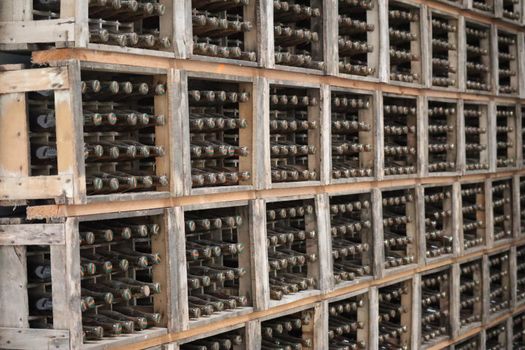
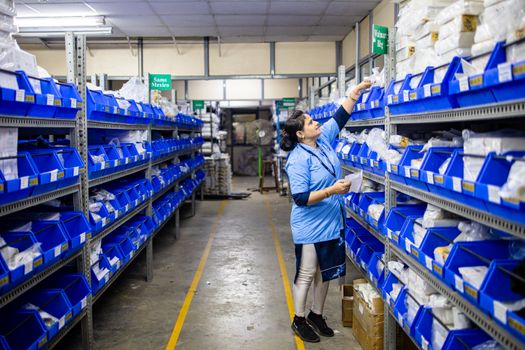
Distributors carry a large and varied inventory. Kegs, cases, bottles, cans, and food products all move at different speeds and require different handling. Temperature-sensitive items need proper storage and transport, while alcoholic beverages come with their own tracking requirements. Without a single, accurate view of stock, distributors can end up with too much of a slow-moving product and not enough of what customers actually order. An ERP system gives distributors real-time visibility into inventory across every warehouse, cooler, and delivery vehicle. Teams can monitor stock levels, track product movement, and set reorder points based on demand patterns. That visibility helps distributors reduce waste, keep popular items in stock, and make better purchasing decisions.

Challenge 2: Keeping Up With Compliance and Agreement Requirements
Distribution runs on agreements. Fox attorneys note that they negotiate a wide range of distribution and sale agreements for manufacturers, suppliers, and distributors, covering national and international brokerage and distribution schemes as well as local and regional sales agency relationships. For distributors of alcoholic beverages, those agreements are especially important because distribution rights and responsibilities must be carefully documented and managed. ERP systems help distributors maintain accurate records, track contract terms, and produce the documentation required for audits and reporting. A unified system makes it easier to prove that products moved through the right channels and that all parties are working from the same information. In an industry where compliance problems can disrupt operations, having clean and organized records is a major advantage.
Challenge 3: Coordinating Deliveries and Routes
Restaurants, bars, convenience stores, and other customers depend on dependable delivery. A late or missed delivery can leave a bar without a key brand or a restaurant without the ingredients it needs for the evening menu. Distributors must balance delivery windows, driver schedules, truck capacity, and the special handling needs of different products. When routes are planned on whiteboards and spreadsheets, deliveries become harder to coordinate as the business grows. ERP helps distributors manage the entire fulfillment process in one place, from order entry and warehouse picking to route scheduling and proof of delivery. With better visibility into delivery status, dispatchers can respond quickly to issues and customers can get accurate updates on their orders.
Challenge 4: Replacing Fragmented Systems and Manual Workarounds
Many growing distributors started with basic accounting software, supplemented by spreadsheets and standalone tools. Orders might be entered in one system while inventory is tracked in another, and accounting runs separately from operations. The result is duplicate data entry, pricing errors, and hours of manual reconciliation every week. These workarounds become even more painful when a distributor adds new warehouses, new product lines, or new customers. ERP replaces the patchwork with a single, connected platform. Order management, inventory, purchasing, finance, and customer data all live in one system. When a sales representative enters an order, the inventory is updated automatically, the invoice is generated, and the finance team sees the transaction without rekeying anything. That level of integration removes the manual work that slows distributors down.
Challenge 5: Getting Reliable Reporting and Forecasting
When data is scattered across spreadsheets and separate systems, reports are often outdated or incomplete. Leaders may not know which products are truly profitable, which customers are growing, or which delivery routes cost the most. Pricing decisions and purchasing plans get made on instinct instead of facts. An ERP platform consolidates operational and financial data into a single source of truth. Dashboards give leadership a real-time view of gross margin, inventory turns, order volume, and delivery performance. With accurate historical data, distributors can forecast demand more confidently, negotiate better purchasing terms, and set prices that protect profitability. Instead of assembling reports from scattered files, teams spend their time acting on the information.
How ERP Solves These Challenges Together
Food and beverage distribution is not about solving one problem in isolation. Inventory affects purchasing, purchasing affects cash flow, and delivery performance affects customer satisfaction. A cloud ERP platform addresses the full picture by uniting operations and finance on one system. Because every department works from the same data, a change in one area is reflected everywhere else immediately. That connected view is especially valuable for distributors who are growing through new product lines, new territories, or acquisitions. The systems that worked for one warehouse or one delivery route do not always scale to the next level, but a unified ERP platform grows along with the business.
For mid-market distributors that have outgrown spreadsheets and basic ERP systems, the move to a modern platform is often the turning point. The benefits go beyond saving time on data entry. Distributors gain the confidence that comes from knowing their numbers are accurate, their inventory is where it should be, and their orders will reach customers as promised.
Choosing an ERP Implementation Partner
Implementing ERP is a significant project, and the right partner makes a meaningful difference. Zastro is a NetSuite ERP consulting and implementation partner that helps growing businesses replace disconnected systems, manual workarounds, and unreliable reporting with a unified, cloud-based ERP platform. Zastro serves mid-market and high-growth companies in manufacturing, distribution, professional services, and food and beverage. The firm uses its proprietary Momentum Flywheel methodology to guide full-cycle implementations, and it offers ongoing support through flexible plans, ticketing, phone, and email. Custom development, integrations, training, and ERP health checks are also available to help distributors get the most from their investment. For decision makers who have outgrown their current tools, working with an experienced partner can be the difference between a smooth transition and a costly disruption.
Frequently Asked Questions
What is a food and beverage distributor?
A food and beverage distributor buys products from manufacturers and suppliers and delivers them to restaurants, bars, stores, and other businesses that serve consumers. Distributors may specialize in one area or carry a broad portfolio. Reyes Beverage Group, for example, distributes beer, spirits, ready-to-drink cocktails, non-alcoholic options, and wine, while Ben E. Keith distributes both food products and alcoholic beverages.
What are the biggest challenges for food and beverage distributors?
Distributors commonly struggle with complex inventory management, compliance and agreement tracking, route coordination, fragmented systems, and unreliable reporting. Manual processes and disconnected tools make these problems worse as the business grows. A unified ERP platform helps address all of these areas by putting inventory, orders, finance, and customer data into one system.
How does ERP improve inventory management for distributors?
ERP gives distributors real-time visibility into stock levels across warehouses and delivery vehicles. Teams can track product movement, set reorder points, and monitor slow-moving inventory. Because inventory data is connected to orders and purchasing, distributors can keep popular products in stock while reducing waste and overstock. That accuracy supports better purchasing decisions and healthier margins.
How can a distributor get started with ERP?
Distributors should look for an implementation partner with experience in their industry. Zastro helps food and beverage distributors move from disconnected systems to a unified NetSuite ERP platform. The process begins with understanding current workflows and pain points, then uses a proven methodology to implement, train, and support the team through the transition.