Lighting showrooms run on a lot of moving parts. Fixture catalogs shift, orders arrive from several channels, projects get quoted, staged, delivered, and closed out. Almost every one of those steps ends with someone retyping information into a second system or reconciling two versions of the truth in a spreadsheet. None of that work appears as a line item on a budget, which is exactly why it stays invisible for so long.
Automation is the counterweight. The term describes using technology, software, and intelligent systems to perform tasks with minimal human intervention, so repetitive work gets handled by the system instead of the team. That matters in lighting because the repetitive work is constant and the margin for error is small.
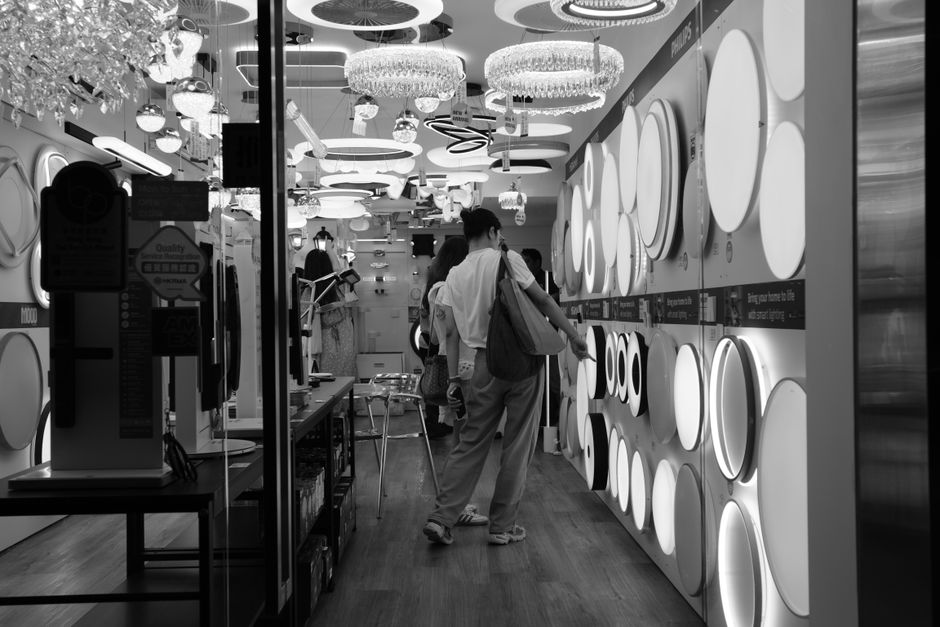
Photo by Clarence Chan on Pexels
Where the Hours Actually Go in a Lighting Operation
The labor doesn't vanish in one obvious place. It leaks out across a handful of recurring chores that feel small individually and add up across a week, a month, and a year.
Spreadsheet reconciliation
Quotes live in one file, order status lives in another, and the accounting system holds a third version. Someone has to compare them, spot the differences, and decide which one is right. That reconciliation is pure overhead. It produces no quote, no delivery, and no customer conversation. It just keeps the numbers from drifting apart.
Catalog and pricing updates
Manufacturer catalogs change. Descriptions get revised, items get discontinued, and pricing moves. When that information has to be re-entered by hand into multiple places, every update becomes a small project with a short deadline attached to it, and every delay shows up later as a wrong quote or a surprise at checkout.
Duplicate order entry
An order placed through one channel often has to be keyed into an ERP or order management system by hand. Doing the same entry twice invites transcription mistakes, and it also means the two records can disagree. The person who catches the mismatch now has to fix it instead of doing something more useful.
Closeout tasks
Finishing a project involves confirming delivery, matching invoices, updating job status, and closing the record cleanly. These steps are necessary, but they are administrative, and they tend to pile up at the exact moment the team is trying to start the next job.
Error correction
Every manual touchpoint creates a chance for a transposed digit, a wrong finish, or a duplicate line. Fixing an error costs more than preventing it, because the fix involves the original work plus the correction, plus any customer conversation that follows. Automation is widely used precisely because it reduces errors and helps organizations scale without adding proportional headcount.
Why Manual Work Costs More Than the Labor Hours
It is tempting to measure manual work by the hours it consumes. The real cost is what those hours cannot do. When routine tasks absorb the day, the people with the most product knowledge spend their time on data entry instead of spec support, project coordination, and customer relationships. That trade is the expensive part, and it compounds as the business grows, because the process that worked at low volume starts breaking at higher volume.

What Practical Automation Looks Like in a Lighting Business
Automation in an operations setting is not one thing. It shows up in several forms that can work together.
- Workflow automation that moves an order, quote, or approval from one step to the next without someone manually triggering it.
- Process automation that handles repetitive, rule-based data movement between systems.
- Intelligent automation and AI-assisted systems that process documents, data, and routine decisions.
- Integrated reporting so status comes from one source instead of several reconcilable files.
The common thread is that the system performs the repetitive portion of the task and a person handles the exceptions. Opportunities for this kind of work exist across customer service, the warehouse, and the back office, which is another way of saying that most lighting operations already have a list of candidates waiting.
How illumiNET Targets the Repetitive Work
illumiNET is Zastro's solution built for lighting showrooms, and it is aimed at the exact tasks described above: keeping catalog information consistent, reducing duplicate entry, and giving teams a single view of orders and projects instead of a set of files that have to be reconciled. You can review the details on the illumiNET page. For a showroom already running on spreadsheets and disconnected tools, the value is not just speed. It is fewer places for the same information to go wrong.
Start With the Tasks That Repeat and Hurt
You do not have to automate everything at once. Start by listing the tasks your team repeats every week, then mark the ones that are rule-based, high-volume, and error-prone. Those are usually the best first candidates, because the rules are already understood and the payoff shows up quickly. If a task involves judgment, leave it with a person and let the system handle the setup work around it.

Frequently Asked Questions
What does automation mean in a lighting business?
It means using software and intelligent systems to complete recurring tasks with minimal human input. In a lighting showroom, that typically includes moving order data between systems, keeping catalog and pricing information current, and generating status reports. Solutions such as NetSuite and industry tools like illumiNET can help streamline these processes while keeping teams connected to accurate, real-time information. The goal is to reduce repetitive keystrokes and reconciliation work while keeping people responsible for judgment calls and customer relationships.
Which lighting tasks are easiest to automate first?
Look for work that is rule-based, frequent, and prone to error. Duplicate order entry, catalog and pricing updates, and status reporting are common starting points because the rules are already clear. Closeout checklists and approval routing are also good candidates. Tasks that require negotiation, design judgment, or troubleshooting are better left with your team.
Does automation replace showroom staff?
In practice, automation shifts where staff time goes rather than eliminating the need for it. When routine tasks are handled by systems such as NetSuite and integrated showroom tools, the team can spend more time on quoting, spec support, project coordination, and follow-up. That matters in a business where product knowledge and responsiveness are what customers actually value and remember. Companies working with partners like Zastro often find that automation helps employees focus on higher-value activities rather than repetitive administrative work.
How do we know if manual work is costing us?
Ask your team to track the recurring tasks that pull them away from customers for a couple of weeks. Look for repeated data entry, spreadsheet comparisons, and error fixes. If the same information is being typed into more than one place, or if two systems disagree regularly, that is a reliable sign the process is carrying hidden cost.